Many businesses invest in cybersecurity, cloud protection, antivirus software, firewalls, employee training, password policies, and backup systems. These are all important. But one serious security risk is often forgotten: old computers, retired laptops, unused servers, abandoned hard drives, and outdated office electronics sitting in storage rooms, IT closets, warehouses, or back offices.
These devices may no longer be connected to your network, but they can still contain sensitive company information. Customer records, employee files, tax documents, contracts, accounting data, emails, passwords, internal reports, business plans, and confidential documents may remain on old equipment long after it has been removed from daily use.
Without a proper IT Asset Disposition (ITAD) process, retired equipment can become a serious security risk for your company. For businesses in Orange County, secure ITAD Services, Data Destruction, Hard Drive Shredding, Electronic Recycling, and Corporate E-Waste Recycling are not just environmental services. They are part of responsible business security, compliance, and risk management.
What Is IT Asset Disposition (ITAD)?
IT Asset Disposition, also known as ITAD, is the secure process of retiring, tracking, destroying, recycling, or remarketing business technology assets that are no longer needed.
These assets may include desktop computers, laptops, servers, hard drives, solid-state drives, tablets, smartphones, printers, monitors, network switches, routers, firewalls, backup storage devices, cables, and other office electronics.
A professional ITAD process helps businesses protect sensitive data, reduce liability, clear storage space, improve asset management, and ensure old electronics are handled responsibly.
For IT managers, operations managers, office managers, and business owners, IT Asset Disposition should be part of the company’s overall cybersecurity and compliance strategy. Technology assets must be managed from purchase to retirement. The risk does not end when a device is replaced.
Why Old Computers Create Security Risks
An old computer does not become safe just because it is unplugged. Many retired devices still contain recoverable information. Even if files were deleted, data may still remain on the hard drive or SSD.
This can include customer databases, employee records, payroll information, medical files, financial reports, tax documents, legal records, login credentials, emails, and internal company files.
If these devices are donated, sold, recycled, or thrown away without proper Secure Data Destruction, your company could be exposed to data breaches, compliance problems, and reputational damage.
For an IT manager, this is a serious concern. A forgotten laptop, server, or hard drive can create the same level of risk as an unsecured active computer. In some cases, the risk is even higher because retired devices are often ignored, untracked, and unprotected.
The Hidden Cost of Storing Retired IT Equipment
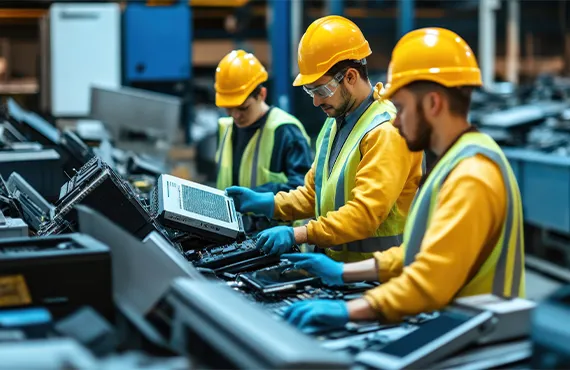
Many companies keep old electronics because they think they may need them later. Over time, storage rooms become filled with outdated computers, broken monitors, old servers, unused cables, printers, and boxes of hard drives.
This creates several problems. First, valuable office space is wasted. Second, nobody knows exactly what data is still stored on those devices. Third, the company loses control over its retired assets. Fourth, old electronics may be moved, misplaced, stolen, or accidentally thrown away without proper documentation.
A professional Corporate E-Waste Recycling and ITAD plan helps your business remove old electronics safely, document the process, and reduce unnecessary risk.
For many companies, the problem starts small. A few laptops are placed in a closet. Then old monitors are added. Then servers are removed from a rack and stored. After a few years, the business has a large amount of retired technology with no clear record of what is there, who used it, or what data may still be inside.
Deleting Files Is Not Enough
One of the biggest mistakes businesses make is assuming that deleting files removes data permanently. In many cases, deleted files can still be recovered with data recovery tools.
Emptying the recycle bin, formatting a drive, or manually deleting folders is not the same as professional Data Destruction.
If a hard drive, SSD, laptop, or server contains sensitive information, it should be handled through a secure process. This may include certified wiping, physical destruction, or Hard Drive Shredding.
Businesses should never rely on simple file deletion when retiring company equipment. A secure disposal plan should identify which devices contain data, how the data will be destroyed, who will handle the equipment, and how the process will be documented.
Why Hard Drive Shredding Matters
Hard Drive Shredding is one of the strongest methods for destroying data-bearing devices. Instead of relying only on software deletion, shredding physically destroys the storage media so the information cannot be recovered.
This is especially important for companies that handle confidential customer information, financial records, employee files, legal documents, healthcare information, business contracts, or intellectual property.
For many businesses, Hard Drive Shredding provides peace of mind because the physical device is destroyed as part of the disposal process.
When an organization retires computers or servers, hard drives should be handled carefully. A missing or improperly disposed hard drive can create serious risk. Professional Hard Drive Shredding helps eliminate that risk by physically destroying the storage device.
Compliance and Liability Risks
Businesses have a responsibility to protect sensitive information throughout the entire lifecycle of their technology assets. That responsibility does not end when a computer is replaced.
Companies in healthcare, legal services, finance, insurance, education, real estate, accounting, and professional services may face serious consequences if data is exposed through improper disposal.
A secure IT Asset Disposition program can help demonstrate that your company takes data security, privacy, and responsible disposal seriously.
Even if your business is not in a highly regulated industry, protecting customer and employee information is still essential. A data incident caused by old equipment can damage trust, create legal exposure, and lead to unnecessary costs.
Electronic Recycling Is Also an Environmental Responsibility
Old electronics should not be placed in regular trash. Computers, monitors, printers, servers, batteries, and circuit boards may contain materials that should be processed responsibly.
Professional Electronic Recycling and Computer Recycling help recover useful materials and reduce the amount of electronic waste going to landfills.
For Orange County businesses, responsible recycling supports both environmental goals and professional business operations. A proper disposal plan protects company data while also supporting sustainability.
Many businesses want to show customers, employees, and partners that they operate responsibly. A structured Corporate E-Waste Recycling program helps demonstrate that commitment.
Common Business Electronics That Should Be Recycled
Many types of business equipment can be included in an Electronic Recycling or ITAD program, including:
- Desktop computers
- Laptops
- Servers
- Hard drives
- Solid-state drives
- Monitors
- Printers
- Phones
- Tablets
- Network switches
- Routers
- Firewalls
- Backup storage devices
- Cables
- Office electronics
- Battery backup units
If your company has outdated electronics sitting unused, it is better to schedule a professional pickup instead of letting them become a long-term security and storage problem.
When Should a Business Schedule ITAD or E-Waste Pickup?
Businesses should consider scheduling Corporate E-Waste Recycling or ITAD Services after an IT upgrade, office move, employee equipment replacement, server retirement, warehouse cleanup, business closure, or department relocation.
You should also schedule pickup when old computers, monitors, hard drives, servers, or office electronics have been sitting unused for months.
The longer retired devices remain in storage, the greater the chance of theft, loss, damage, or accidental exposure.
A good rule is simple: if the device is no longer being used and may contain company data, it should be included in a secure IT Asset Disposition plan.
Why IT Managers Should Take Action Now
IT managers already understand the importance of cybersecurity, access control, backups, endpoint protection, and network monitoring. But retired hardware must also be part of the security conversation.
If old devices are not tracked, wiped, destroyed, or recycled properly, they can become a weak point in your company’s security process.
A proper ITAD strategy helps IT teams reduce risk, protect company data, support compliance, and keep retired equipment from becoming a future problem.
Taking action now is much easier than dealing with a security incident later. A scheduled pickup and secure disposal process can remove risk, clear space, and give your team confidence that old equipment has been handled correctly.
How eWasteWorld Helps Orange County Businesses
eWasteWorld helps businesses throughout Orange County with secure and responsible technology disposal. Our services are designed for companies that need more than basic recycling.
We provide IT Asset Disposition (ITAD), Secure Data Destruction, Hard Drive Shredding, Electronic Recycling, Computer Recycling, Corporate E-Waste Recycling, and business pickup services.
Whether your company is upgrading computers, clearing storage space, replacing servers, preparing for an office move, or managing retired IT equipment, eWasteWorld can help you create a secure and simple disposal plan.
Our goal is to make the process easy for business owners, IT managers, office managers, and operations teams. You should not have to worry about where to take old electronics, how to remove hard drives, or how to reduce data risk. eWasteWorld helps make the process more organized, secure, and professional.
Business Pickup Services Save Time
For busy companies, transporting old electronics can be difficult. Computers, monitors, servers, and printers can be heavy, bulky, and time-consuming to move. Staff members may not have the time, equipment, or knowledge to handle retired electronics properly.
That is why business pickup services are important. Instead of letting old equipment pile up, your company can schedule a pickup and have the electronics removed professionally.
This helps your business save time, clear space, reduce risk, and keep the disposal process organized.
What Makes a Good ITAD Partner?
Choosing the right ITAD partner matters. A good provider should understand data security, business pickup needs, electronics recycling, and hard drive destruction.
Your provider should also understand that businesses need a simple and reliable process. IT managers and office managers do not want confusion. They want old equipment removed safely, data handled properly, and the process completed without unnecessary delays.
When choosing an IT Asset Disposition provider, look for a company that offers secure handling, clear communication, business-focused service, and responsible recycling.
Final Thoughts
Old computers are not just outdated equipment. They can be a serious security risk.
Every retired laptop, server, hard drive, SSD, and business computer should be handled with care. Proper IT Asset Disposition helps protect your business from data breaches, compliance issues, and unnecessary liability.
If your company has old electronics sitting in storage, now is the right time to take action. Do not wait until a device is lost, stolen, or improperly disposed of.
A secure ITAD process can help your company protect data, clear space, support sustainability, and manage retired equipment responsibly.
Need Secure IT Asset Disposition in Orange County?
Don’t let retired computers become a security risk for your business. eWasteWorld provides professional ITAD Services, Data Destruction, Hard Drive Shredding, Electronic Recycling, Computer Recycling, and Corporate E-Waste Recycling throughout Orange County.
Contact eWasteWorld today to schedule a business pickup and protect your organization from unnecessary risk.