

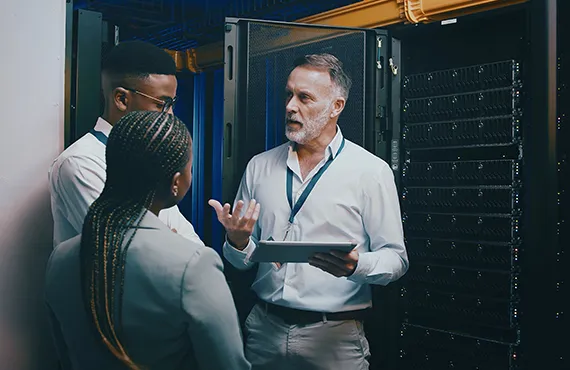
Data Center Decommissioning and ITAD: A Guide for IT Managers
Data centers and server rooms are the heart of business technology. They support applications, file storage, backups, authentication, databases, security systems, and communication. But as companies move to cloud platforms, replace outdated servers, consolidate locations, or upgrade infrastructure, old equipment must be removed safely and responsibly.
For IT managers, data center decommissioning is not simply unplugging hardware. It is a controlled process that includes planning, inventory, secure data handling, equipment removal, documentation, and recycling. A mistake during decommissioning can expose sensitive data, disrupt operations, or create compliance issues.
eWasteWorld helps businesses manage retired IT infrastructure through secure ITAD, server recycling, data destruction, and responsible electronics recycling. Our goal is to help IT teams reduce risk and make the retirement of old equipment easier, safer, and more professional.
Why Data Center Decommissioning Requires Planning
Servers, storage devices, switches, routers, firewalls, racks, UPS systems, and cables often work together as part of a larger network. Removing equipment without a plan can create confusion, lost assets, accidental downtime, or incomplete data destruction.
A good decommissioning plan identifies what equipment is being removed, what data may exist on each device, which systems are still active, which assets need destruction, and which items can be recycled or recovered. IT managers should also consider access control, transportation, asset reporting, and documentation.
This is why ITAD services are valuable. A professional ITAD process helps connect technical removal with business risk management.
Network+ Concepts Inside a Server Room
Network+ teaches that infrastructure is built from interconnected components. A server room may include Layer 2 switches, Layer 3 routing, firewalls, wireless controllers, patch panels, copper cabling, fiber connections, DNS, DHCP, VLANs, subnets, and access control systems. These are not random devices. They represent the structure of the business network.
When equipment is retired, the information inside or connected to these systems may still matter. A server may contain user files, application data, logs, backups, virtual machines, or database information. A switch may show VLAN design. A firewall may store security policies. A storage array may contain years of business data.
Because of this, server recycling must be handled carefully. Drives should be removed, wiped, shredded, or destroyed according to the company’s security requirements. Equipment should be tracked, and the business should receive documentation.
Data-Bearing Assets Are the Highest Risk
The most important part of decommissioning is identifying data-bearing assets. These may include hard drives, SSDs, servers, SAN/NAS storage, backup appliances, laptops, desktops, removable media, and certain network devices.
Deleting files or formatting a drive is not enough for business security. Data may still be recoverable with forensic tools. A professional process uses secure data destruction methods such as certified wiping, shredding, crushing, or physical destruction when appropriate.
For IT managers, the question should not be “Is the device old?” The question should be “Could this device contain recoverable business information?” If the answer is yes, it needs a secure destruction plan.
Chain of Custody Protects the Business
When equipment leaves the building, the company still needs to know where it went and how it was handled. A proper chain of custody helps document the movement of equipment from pickup to processing. This is especially important for businesses with sensitive customer data, employee records, financial information, healthcare information, legal records, or intellectual property.
Chain of custody can support audits, internal reviews, compliance requirements, and insurance questions. It also protects the IT manager by showing that retired assets were not handled casually or given to an unknown party.
When a recycling partner provides documentation, asset reports, and certificates when applicable, the business has proof that the decommissioning process was handled responsibly.
Common Data Center Equipment That Needs Recycling
During decommissioning, businesses may need removal and recycling for rack servers, blade servers, storage arrays, networking switches, routers, firewalls, load balancers, battery backups, PDUs, cables, racks, monitors, keyboards, and old workstations.
network equipment recycling is especially important because routers, switches, and firewalls may contain configuration data. hard drive destruction is critical when storage media contains sensitive data. SSD destruction may also require special handling because SSDs store data differently than traditional hard drives.
IT managers should not assume every device can be handled the same way. A good recycling partner helps separate equipment by risk level and processing requirement.
Reducing Downtime During Equipment Removal
One major concern during decommissioning is business continuity. Equipment should not be removed until the IT team confirms that systems are no longer active, backups are complete, data migration is finished, and replacement systems are working.
Professional removal supports a smoother process. Equipment can be staged, sorted, and removed in a way that reduces disruption. For multi-location businesses, scheduling and coordination become even more important.
When businesses choose a reliable corporate IT recycling partner, internal IT teams can stay focused on users, systems, and projects instead of spending days moving hardware and figuring out disposal logistics.
Compliance, Security, and Environmental Responsibility
Data center equipment creates both security and environmental responsibilities. Storage devices must be protected, and electronics should not be dumped in landfills or handled by unqualified vendors. Responsible e-waste recycling helps recover materials and reduce environmental harm.
Companies today are expected to manage technology responsibly. Customers, partners, auditors, and leadership teams want to know that business electronics are handled securely and sustainably.
For many organizations, decommissioning is also connected to ESG goals, cybersecurity policies, and vendor risk management. A proper process helps support all three.
Why eWasteWorld Is the Right Partner
eWasteWorld provides secure recycling and ITAD support for businesses retiring servers, network devices, storage equipment, office electronics, and related infrastructure. We understand that IT managers need clear communication, secure handling, and dependable service.
Our team helps with IT equipment disposal, electronics recycling, data destruction, and business pickup services. Whether you are clearing one server room or removing equipment from multiple offices, we can help create a safer and more organized recycling process.
Call to Action
If your company is planning a server refresh, cloud migration, office move, or infrastructure cleanup, do not wait until retired equipment becomes a security problem. Contact eWasteWorld today for secure business electronics recycling, ITAD support, and responsible data center decommissioning services.